By Nour, Registered Dietitian and Functional Gut Nutritionist. Last updated [November 25, 2026].
Knowing how to prevent bloating starts before the meal. Long gaps between meals, heavy plates, constant grazing, and a gut that never gets a break make holiday bloat predictable, and you can prevent it.
These are the six habits I use myself and give my clients before every big meal.
Quick answer: To prevent bloating at holiday gatherings and big meals, eat three meals a day (including breakfast on big-dinner days), walk 15-30 minutes after heavy meals, sip a digestive tea, stop eating at 80% full, take digestive enzymes before you eat, and support your stomach lining if you get reflux. If you bloat after normal meals all year, the holidays are not the problem.
Why Do You Get Bloated at Holiday Gatherings and Big Meals?
You get bloated during the holidays because big portions, rich food, alcohol, irregular meal timing, constant snacking, and less movement all slow digestion and increase gas. Bloating is the result of food sitting and fermenting in your gut longer than it should.
The six habits below target each of those causes.
1. Stop Grazing and Eat 3 Meals a Day to Prevent Bloating
Eat three meals and skip the grazing. Big dinner planned? Still eat breakfast.
Between meals, your gut runs a cleaning wave called the migrating motor complex (MMC). It sweeps leftover food and bacteria from your stomach and small intestine toward the colon. It needs a few hours of no food to run, and every snack or nibble shuts it down.
Skipping breakfast to “save room” backfires. You end up hungry, you graze all day, your MMC never gets to work, and you walk into the big meal ready to overeat. Eat a real breakfast, then three solid meals with breaks between them.
2. Walk 15-30 Minutes After a Heavy Meal
Take a light 15-30 minute walk after a heavy meal. Movement helps your stomach empty and helps gas move through your gut.
Keep the pace easy. Save intense workouts for before you eat, because hard exercise right after a big meal can leave you more uncomfortable. If everyone at the table is heading to the couch, be the one who suggests a lap around the block.
3. Sip a Digestive Tea After Meals
Drink a digestive tea after meals made from ginger, fennel seed, anise seed, or caraway seed. These are traditional carminative herbs, which means they help ease gas and bloating.
To make it, steep one teaspoon of lightly crushed seeds (or a few slices of fresh ginger) in hot water for 10 minutes. Fennel and caraway are my favorites for after a heavy dinner. Keep the tea unsweetened, or add a small spoonful of honey if you like.
4. Stop Eating at 80% Full
Stop eating when you are 80% full. The last bite tastes the same as the first, and you are not missing anything by leaving it.
A stomach stretched past comfortable fullness digests slowly, and slow digestion is what turns into bloat, reflux, and that heavy feeling. Remember too that the “special” food will still be there tomorrow. Eat what you love, slowly, and stop at comfortable.
5. Take Digestive Enzymes Before You Eat to Prevent Bloating
Take digestive enzymes right before you eat, not after. They help break down the food while it is still in your stomach.
My pick is Digest Gold, and it’s the one I’m comfortable recommending without testing. If you have a sensitive stomach, start with Digest Basic. Enzymes help you digest the meal in front of you. They do not repair your gut or fix the reason you bloat, which is why they sit at tip five and not tip one.
Get Digest Gold or Digest Complete from my online supplement store here.
6. Get Heartburn or Acid Reflux Relief by Supporting Your Stomach Lining
If holiday and big meals give you heartburn or acid reflux, look for a formula with DGL, glutamine, slippery elm, or marshmallow root. These ingredients help soothe and nourish the lining of your stomach and esophagus.
My pick is Digest Ease from Vital Nutrients. Check with your provider first if you take medication, and get evaluated if you have reflux several times a week, trouble swallowing, or pain that wakes you at night.
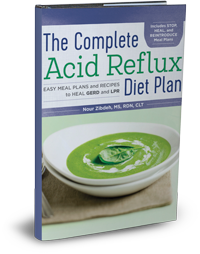
Get Digest Ease from my online supplement store here. You can also get my book, The Complete Acid Reflux Diet Plan, for an easy meal plan and recipes for acid reflux, GERD, and LPR.
When You Can’t Prevent or Stop Bloating With Tips Alone
Chronic bloating, heaviness, excessive burping, fatigue, constipation, or brain fog after eating are not holiday problems. They are signs of hidden digestion and microbiome problems that need a deeper, root-cause approach.
Here is why tips alone are not enough. Enzymes help you digest food, and nutrients nourish the gut lining. But if you have microbes that consistently excessively ferment your food, produce toxins, and damage your gut lining, the source of the problem is still there.
The usual suspects are H. pylori, small intestinal bacterial overgrowth (SIBO), and gut dysbiosis. Testing and a targeted protocol find and fix the cause, so you stop managing symptoms.
Want to fix your gut so you never dread the next holiday or family gathering? Learn more about my 1-1 comprehensive functional medicine gut reset program, and you can book your first Assessment and Strategy Session HERE.
How to Prevent Bloating and Stop It Fast: FAQ
How do I get rid of bloating fast after a big meal?
Walk for 15-30 minutes at a light pace, sip fennel, ginger, or caraway tea, and stay upright for a couple of hours. Do not lie down right after eating, and do not snack again to “settle” your stomach. Most holiday bloat eases within a few hours to a day.
What causes a huge bloated belly?
A swollen belly usually comes from trapped gas, constipation, overeating, swallowed air, or slow digestion. Bloating that appears fast after a big meal and fades is common. A belly that stays distended for days, or arrives with pain, vomiting, blood in your stool, or unintentional weight loss, needs further investigation.
Why am I bloated after eating all the time?
Bloating after most meals, even small or healthy ones, points to a pattern. It’s not about the food. If heaviness, fatigue, constipation, or brain fog come after eating, the cause is often related to deeper gut problems like H. pylori, SIBO, gut dysbiosis, low stomach acid, low bile flow, candida, or other infections. Tips to reduce bloating ease the symptoms, but testing and correcting the underlying imbalances is what solves bloating long-term.
What is the best tea to prevent bloating after meals?
Ginger, fennel seed, anise seed, and caraway seed are the best teas to prevent bloating after meals. They are traditional carminative herbs that help ease gas and support digestion. Steep seeds or fresh ginger in hot water for about 10 minutes and drink it after your meal.
Can SIBO cause bloating?
Yes. Small intestinal bacterial overgrowth (SIBO) is a common contributor to chronic bloating, fullness, and reflux. SIBO interferes with digestion, and excessive fermentation by bacteria triggers bloating, gas, excessive burping, and reflux. SIBO bloating usually happens 2-4 hours after eating. Learn more about SIBO here.
Can H. pylori infection cause bloating?
Yes. H. pylori is a common stomach bacteria that triggers bloating, indigestion, stomach pain, nausea, and heartburn. H. pylori interferes with stomach acid production and reduces your ability to digest food. This contributes to bacterial overgrowth like small intestinal bacterial overgrowth (SIBO), nutrient deficiencies, among other things. H. pylori driven bloating usually happens immediately after eating, within the first hour. You can learn more about H. pylori here and get my protocol to naturally eradicate H. pylori here.
Does walking after eating relieve bloating?
Yes. A light 15-30 minute walk after a meal helps your stomach empty and moves gas through your intestines, which lowers your risk of bloating. Keep it easy, because intense exercise right after eating can make discomfort worse.
Do digestive enzymes prevent bloating?
Digestive enzymes taken right before a heavy meal help your body break down the food and can prevent bloating and heaviness from that meal. They support the meal in front of you but do not fix the cause of chronic bloating. Check with your provider first if you are pregnant, take blood thinners, or have ulcers.
Should I skip meals before a big dinner to avoid bloating?
No. Eat breakfast and your usual meals. Skipping meals leads to grazing and overeating, and constant snacking interrupts the migrating motor complex, your gut’s between-meal cleaning wave. Steady meals with breaks between them leave you less bloated at the big dinner.